- Sulfate-free
- Plant-derived
- Baby-safe formulas
- Biodegradable
- COA with every batch
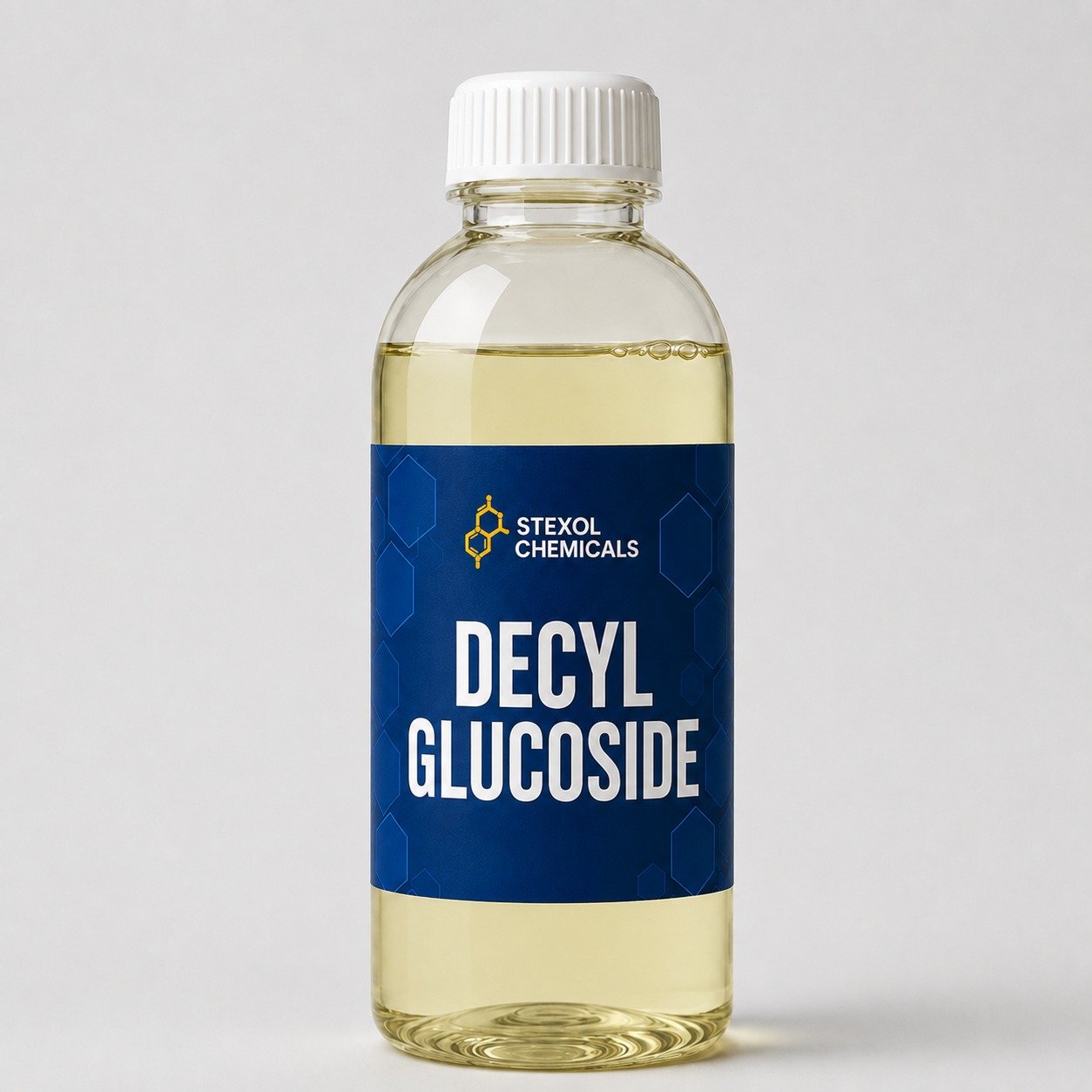
Decyl Glucoside is a gentle alkyl polyglucoside (APG) surfactant made from plant fatty alcohols (coconut/palm kernel) and glucose from corn starch. It gives rich, fine, stable foam on its own and works with anionic, amphoteric and cationic ingredients, so it fits almost any cleansing formula.
It matches Plantacare® 2000 UP on INCI name, active content, ionic character and supplied pH, so you can usually swap it 1:1 into an existing formula without reworking your recipe.
Technical Specifications
| INCI name |
Decyl Glucoside |
| Type |
Non-ionic surfactant (alkyl polyglucoside) |
| Active content |
51–55% in water |
| pH as supplied |
11.5–12.5 (always neutralise in your formula) |
| Appearance |
Viscous, yellowish, clear-to-cloudy liquid |
| Origin |
100% renewable plant feedstocks; no ethylene oxide |
| Equivalent to |
BASF Plantacare® 2000 UP |
| Shelf life |
24 months, unopened original packaging |
Why Formulators Choose It
Gentle cleansing
Cleans well without the harsh, stripping feel of sulfates. Ideal for baby, tear-free and sensitive-skin products.
Rich foam on its own
Unlike most non-ionics, it foams well by itself. Pair it with CAPB for creamier, smoother lather.
Makes SLES formulas milder
Add 2–10% to an SLES shampoo to improve mildness and skin feel without losing foam.
Natural-origin claims
Sulfate-free, PEG-free, no 1,4-dioxane risk and readily biodegradable. Supports “natural” and “sulfate-free” labels.
Works with conditioners
Compatible with polyquaternium-7/-10, guar hydroxypropyltrimonium chloride, glycerin, extracts and most preservatives.
Branded grade, local supply
Plantacare-class performance without import lead times. Check every batch against its COA.
Recommended Usage Levels
Levels are for Decyl Glucoside as supplied (about 51–55% active).
| Product |
% in formula |
| Sulfate-free shampoo (primary surfactant) |
10–30% |
| Body wash / shower gel |
10–25% |
| Face wash / gentle cleanser |
5–20% |
| Hand wash / liquid soap |
10–20% |
| Foaming pump cleanser / mousse |
8–20% |
| Baby shampoo / baby wash |
5–15% |
| Co-surfactant in SLES formulas |
2–10% |
| Micellar water / makeup remover |
1–5% |
| Co-emulsifier aid in emulsions |
0.5–3% |
| Household eco-cleaners |
2–15% |
How to Use
- Stir the drum until uniform before weighing. Cloudiness or separation is normal and does not affect quality.
- Add it to the water phase, cold or warm. Normal process heat is fine.
- Mix gently with low shear to avoid whipping in foam.
- Adjust pH after combining surfactants, using 50% citric acid or lactic acid added slowly.
- If using gums, adjust pH before or right after adding them. HEC can separate at high pH.
Target pH: 5.0–6.0 for shampoos, face washes and body washes; 6.0–7.0 for baby and tear-free products. The cloudiness clears once pH drops below 7. As a guide, 20% Decyl Glucoside with CAPB needs about 0.3% citric acid to reach pH 5. Always measure.
Sample Formula: Sulfate-Free Shampoo
- Water phase: Deionised water (50–65%) with a chelating agent such as disodium EDTA or sodium phytate (0.1–0.2%).
- Thickener: Pre-mix xanthan or sclerotium gum (0.5–1.0%) in glycerin (2–5%), then add to the water and stir until fully hydrated.
- Amphoteric: Add CAPB (8–15%) and mix gently.
- Decyl Glucoside: Add 15–25% slowly, with low-shear stirring.
- Optional co-surfactant: For more body, add sodium cocoyl glutamate, sodium lauroyl sarcosinate or a sulfosuccinate (3–10%).
- Conditioning: Add polyquaternium-10 or guar hydroxypropyltrimonium chloride (0.1–0.5%), pre-dispersed in water.
- pH: Add 50% citric acid dropwise to pH 5.0–6.0 (6.0–7.0 for baby products).
- Additives: Below 40 °C, add panthenol, extracts, proteins and fragrance.
- Preserve: Use a preservative suited to your final pH, such as phenoxyethanol-based systems or sodium benzoate/potassium sorbate (pH ≤ 5.5).
- Rest and check: Salt does not thicken glucoside formulas. Let the batch rest 24 hours before the final viscosity reading.
What You Can Make
- Sulfate-free shampoo
- Baby shampoo & wash
- Face wash
- Body wash & shower gel
- Hand wash & foaming soap
- Micellar water
- Makeup remover
- Cleansing wipes
- Intimate wash
- Beard wash
- Pet shampoo
- Dish & surface cleaners
Storage & Safety
- Store sealed in the original container at 10–40 °C, away from moisture and direct sun.
- Below about 15 °C it may thicken or separate. Warm gently in a water bath and stir until uniform. Avoid repeated freeze–thaw.
- Shelf life: 24 months unopened. Check your batch COA for the expiry date.
Handling: The undiluted raw material is strongly alkaline and can cause serious eye damage. Wear gloves and safety goggles. Once diluted and pH-adjusted in a finished product, it is mild.
Why Buy From Stexol
COA with every batch
Active content, pH and appearance, so you can verify against the Plantacare 2000 UP spec and keep QC records.
Order from 100g
Small packs for R&D and sampling, up to 500 kg for production.
Bulk pricing
The more you buy, the lower your per-kg price. Ask on WhatsApp for a tiered quote.
1–2 working days delivery
Nationwide delivery, with cash on delivery, JazzCash, Easypaisa or bank transfer.
Frequently Asked Questions
Is it equivalent to BASF Plantacare 2000 UP?
Yes. It has the same INCI name, non-ionic character, 51–55% active content and 11.5–12.5 supplied pH, so you can usually swap it 1:1. Confirm the numbers on the batch COA and run a small trial batch to check viscosity and pH.
Is it safe for baby products?
Yes. It contains no sulfates or ethylene oxide and is one of the most widely used surfactants in baby shampoos. Keep the finished product at pH 6–7 and pair it with CAPB. “Tear-free” and “hypoallergenic” claims on your product must be backed by your own testing.
Why is it cloudy? Do I need to adjust pH?
Cloudiness is normal and comes from the high supplied pH. It clears once your formula drops below pH 7. You must adjust the pH of the finished product, usually to 5.0–6.0 with citric or lactic acid.
Salt isn’t thickening my shampoo. What should I do?
Salt does not thicken glucoside-based formulas. Use xanthan or sclerotium gum (0.5–1.5%) dispersed in glycerin, increase the CAPB or mild anionic share, or use a dedicated glucoside thickener.
Can I use it with SLES, CAPB or conditioners?
Yes. It is compatible with SLES, SLS, SCI, glutamates, CAPB and cationic polymers like polyquaternium-10 and guar hydroxypropyltrimonium chloride.
How should I store it?
Sealed in the original container at 10–40 °C, away from moisture and sun. Shelf life is 24 months unopened. Stir before use if it has separated.
Need a Quote or Formulation Help?
Message us with your quantity for bulk pricing, or ask our chemist about your formula.
Chat on WhatsApp

Reviews
There are no reviews yet.