
₨ 150 – ₨ 1,250Price range: ₨ 150 through ₨ 1,250
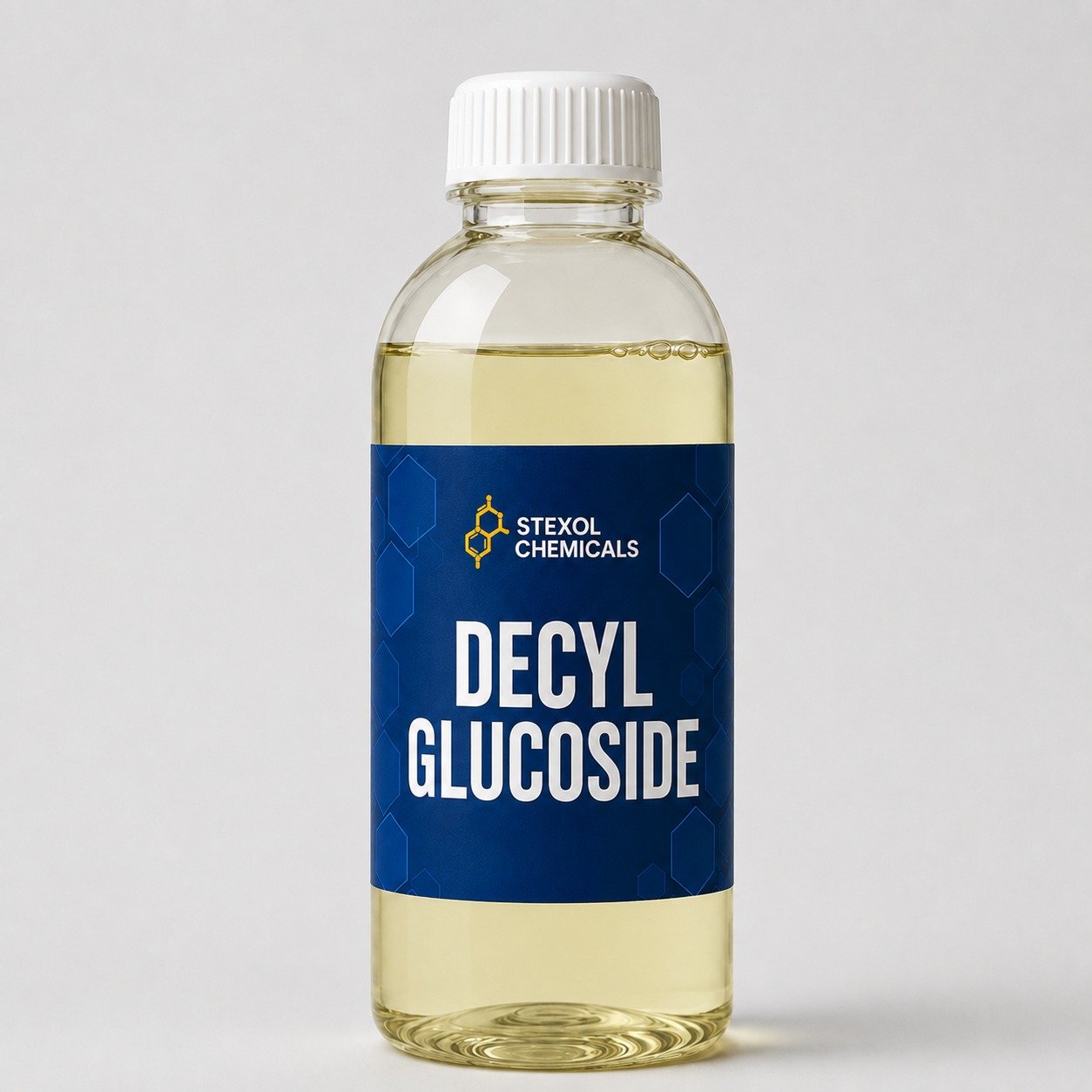
Decyl Glucoside from Stexol Chemicals is a alkyl polyglucoside (APG) surfactant. It is supplied as a 51–55% active solution in water* and made from plant-derived C8–C16 fatty alcohols (coconut/palm kernel) reacted with glucose from corn starch. basf +2 It is a mild non-ionic surfactant, so it carries no electrical charge and works alongside anionic, amphoteric and cationic ingredients. basf
Stexol’s Decyl Glucoside is positioned as a direct equivalent to BASF Plantacare® 2000 UP, the grade most formulators already know. It matches it on INCI name (Decyl Glucoside), active content (51–55%), ionic character (non-ionic) and supplied pH (11.5–12.5)*, so you can use it as a drop-in replacement in existing Plantacare 2000 formulas without re-working your recipe. In finished products it works as a primary or secondary cleansing and foaming agent. basf It brings rich, fine, stable foam and gentle cleansing to sulfate-free shampoos, baby washes, face washes, body washes and hand washes, and it also works well as a co-surfactant that makes harsher SLES systems milder. ingredientstodieforbasf
What sets decyl glucoside apart from most cosmetic surfactants is its high alkaline pH as supplied (about 11.5–12.5). That high pH is deliberate. It keeps the unpreserved (“UP”) raw material stable without added preservatives, and it is why the liquid can look cloudy in the drum. basfcospha BASF attributes this turbidity to the grade’s magnesium oxide content combined with its high pH, and states that it “disappears if the pH value is adjusted to below 7.” basfbiakhim In practice, you always neutralise decyl glucoside in your formula. A small amount of citric or lactic acid brings the finished product to a skin- and hair-friendly pH, and the cloudiness clears as you do.
Gentle, Mild Cleansing: Decyl glucoside cleans effectively without the harsh, stripping feel of sulfates. BASF describes Plantacare 2000 UP as having “first-rate environmental and skin compatibility profiles” and as “a perfect fit also for sensitive skin and baby cleansing concepts.” ulprospectorulprospector That mildness is why it appears so often in baby shampoos, tear-free washes and sensitive-skin cleansers. Wikipediaparenthoodpro
Sulfate-Free, Natural-Origin and Biodegradable: It is made from 100% renewable plant feedstocks (fatty alcohol plus glucose). ulprospector It contains no ethylene oxide, so there is no 1,4-dioxane risk, and it is readily biodegradable: the Interchimie Decyl Glucoside SDS reports 88% biodegradation in 28 days (OECD 301D) for the C10–16 alkyl glycoside component. The benchmark Plantacare 2000 UP is COSMOS- and NaTrue-approved. ulprospectordewolfchem That makes decyl glucoside a natural fit for brands moving away from SLES/SLS towards “sulfate-free”, “PEG-free” and “natural” claims, a trend now well established in Pakistan’s shampoo market. 6wresearch (Certification depends on the grade: ask Stexol for the certificate for the Decyl Glucoside.)
Rich, Stable Foam That Works With Other Surfactants: Unlike most non-ionics, decyl glucoside foams well on its own. Kao notes that typical non-ionics “do not foam without anionic surfactant, however this product foams well by itself.” ulprospector It gives dense, fine, stable lather, and pairing it with cocamidopropyl betaine (CAPB) makes the foam creamier and smoother. basf It blends with all common surfactant types without cutting foam volume. ingredientstodiefor
Makes Harsher Systems Milder, Often at Lower Dosage: Even if you keep SLES, adding decyl glucoside as a co-surfactant improves the skin feel and mildness of the finished product. Suppliers report that it can reduce the total active needed from other foaming agents while keeping cleansing power and foam volume. ingredientstodiefor
Branded-Grade Performance, Available Locally: Buying Plantacare-class material in Pakistan has usually meant import lead times, high minimum orders or unverified “equivalent” claims. Stexol supplies a decyl glucoside with a COA for every batch, so you can check active content and pH against the Plantacare 2000 UP specification yourself, at local prices and with same-day dispatch.
Compatibility With Common Cosmetic Ingredients: Being non-ionic, decyl glucoside works with anionic surfactants (SLES, sodium cocoyl isethionate, glutamates, sulfosuccinates), amphoterics (CAPB, amphoacetates), cationic conditioning polymers (for example polyquaternium-7/-10 and guar hydroxypropyltrimonium chloride), glycerin, plant extracts, fragrances and most preservatives. BASF specifically recommends its sister grade for conditioning shampoos because it is “compatible with cationic surfactants and polymers.” basfbasf
Handling Note: Decyl Glucoside is a viscous, yellowish, clear-to-cloudy liquid. basf Some separation or cloudiness in the container is normal and does not affect quality. BASF’s specification states that separation “has no negative effects on the product quality. The product should be stirred until uniform before use.” dps
How to add it:
Storage:
Target pH: Always neutralise. For shampoos, face washes and body washes, aim for a finished pH of about 5.0–6.0. For baby and “tear-free” products, aim for about 6.0–7.0, closer to the pH of tears. quora Once the pH drops below about 7, the cloudiness of the raw material clears. basf As a rough starting point, 20% decyl glucoside with CAPB needed about 0.3% citric acid to reach pH ~5 in one published formula. humblebeeandme Always measure: the amount varies by batch and formula.
Levels below are for decyl glucoside as supplied (about 50–55% active):
| Product Type | Decyl Glucoside in Formula (by weight) |
| Sulfate-free shampoo (primary surfactant) | 10–30% |
| Baby shampoo / baby wash (tear-free style) | 5–15% |
| Face wash / gentle facial cleanser | 5–20% |
| Body wash / shower gel | 10–25% |
| Hand wash / liquid soap | 10–20% |
| Foaming (pump) cleansers & mousse | 8–20% |
| Co-surfactant to make SLES formulas milder | 2–10% |
| Micellar water / cleansing water | 1–5% |
| Makeup remover / cleansing-wipe lotion | 1–5% |
| Solubiliser / co-emulsifier aid in emulsions | 0.5–3% |
| Household eco-cleaners (dish, surface, laundry boosters) | 2–15% |
The Cosmetic Ingredient Review reports rinse-off use of decyl glucoside up to 33%. cir-safety In leave-on products, keep levels low; it is not a primary emulsifier.
A typical sulfate-free shampoo or body wash built on Decyl Glucoside:
COA By Batch: Every batch of Decyl Glucoside comes with its own Certificate of Analysis showing active content, pH and appearance, so you can check it against the Plantacare 2000 UP specification and keep records for your QC and regulatory files.
No Minimum Order Pressure: Buy a small pack for R&D and sampling, or full drums for production. We supply both.
Discounted Pricing on Bigger Orders: The more you buy, the lower your per-kg price. Message us on WhatsApp with your quantity for a tiered bulk quote.
Same-Day Dispatch: Orders confirmed during working hours are dispatched the same day, so your production line keeps running.
Q1. Is Stexol’s Decyl Glucoside equivalent to BASF Plantacare 2000 UP?
Yes, it is supplied as a Plantacare 2000 UP-type grade with the same INCI name (Decyl Glucoside), non-ionic character, 51–55% active content and 11.5–12.5 supplied pH. You can usually swap it 1:1 into an existing formula. Each batch’s COA lets you confirm the numbers before you produce. As with any raw-material change, run a small trial batch to check viscosity and pH.
Q2. Is decyl glucoside sulfate-free, natural and safe for baby products?
Yes. It contains no sulfates and no ethylene oxide, and it is made from plant fatty alcohol and glucose. basf It is one of the most widely used surfactants in baby shampoos and sensitive-skin washes. ulprospectorWikipedia Keep the finished product near-neutral (pH 6–7) and pair it with CAPB for a gentle, tear-free style formula. “Tear-free” and “hypoallergenic” claims on your finished product must be backed by your own testing. The North American Contact Dermatitis Group reports sensitisation rates to decyl glucoside of less than 2% of patch-tested patients, so avoid absolute “non-allergenic” claims.
Q3. Why is my decyl glucoside cloudy, and do I need to adjust the pH?
Cloudiness is normal. It comes from the high pH (about 11.5–12.5) the material is supplied at, plus magnesium oxide (up to 500 ppm in Plantacare 2000 UP, per the CIR’s data). It clears once your formula drops below pH 7. Separation or thickening in cold weather is also normal: warm gently and stir until uniform. You must adjust the pH of the finished product, usually with citric or lactic acid, to about 5.0–6.0 for shampoos and washes.
Q4. How do I thicken a decyl glucoside shampoo?
Salt isn’t working. Salt does not thicken glucoside-based systems. humblebeeandme Instead:
Adjust the pH before adding polymers, because some thickeners (especially HEC) can separate at high pH.
Q5. Can I use decyl glucoside with SLES, CAPB or cationic conditioners?
Yes. It is compatible with anionics (SLES, SLS, SCI, glutamates), amphoterics (CAPB), and cationic conditioning polymers such as polyquaternium-10 and guar hydroxypropyltrimonium chloride. basf +2 Adding 2–10% to an SLES shampoo is a common way to make it milder without losing foam.
Q6. How should I store it, and what is the shelf life?
Keep it sealed in the original container at 10–40 °C, away from moisture and direct sun. Shelf life is 24 months unopened (check the expiry on your batch COA). Stir before use if separation has occurred. dps
Get Plantacare 2000-grade Decyl Glucoside for your sulfate-free shampoos, baby washes, face washes and natural cleansers from a supplier that backs every batch with a COA. Order small packs for R&D or large packs and drums for production. You get same-day dispatch, tiered bulk pricing and a COA with every order.
Message Stexol Chemicals on WhatsApp [+92-316-0099118] now to get a quote and buy decyl glucoside in Pakistan the easy way.
| Weight | 1 kg, 500g, 250g, 100g |
|---|
Specifications not available.
Reviews
There are no reviews yet.