₨ 150 – ₨ 1,250Price range: ₨ 150 through ₨ 1,250
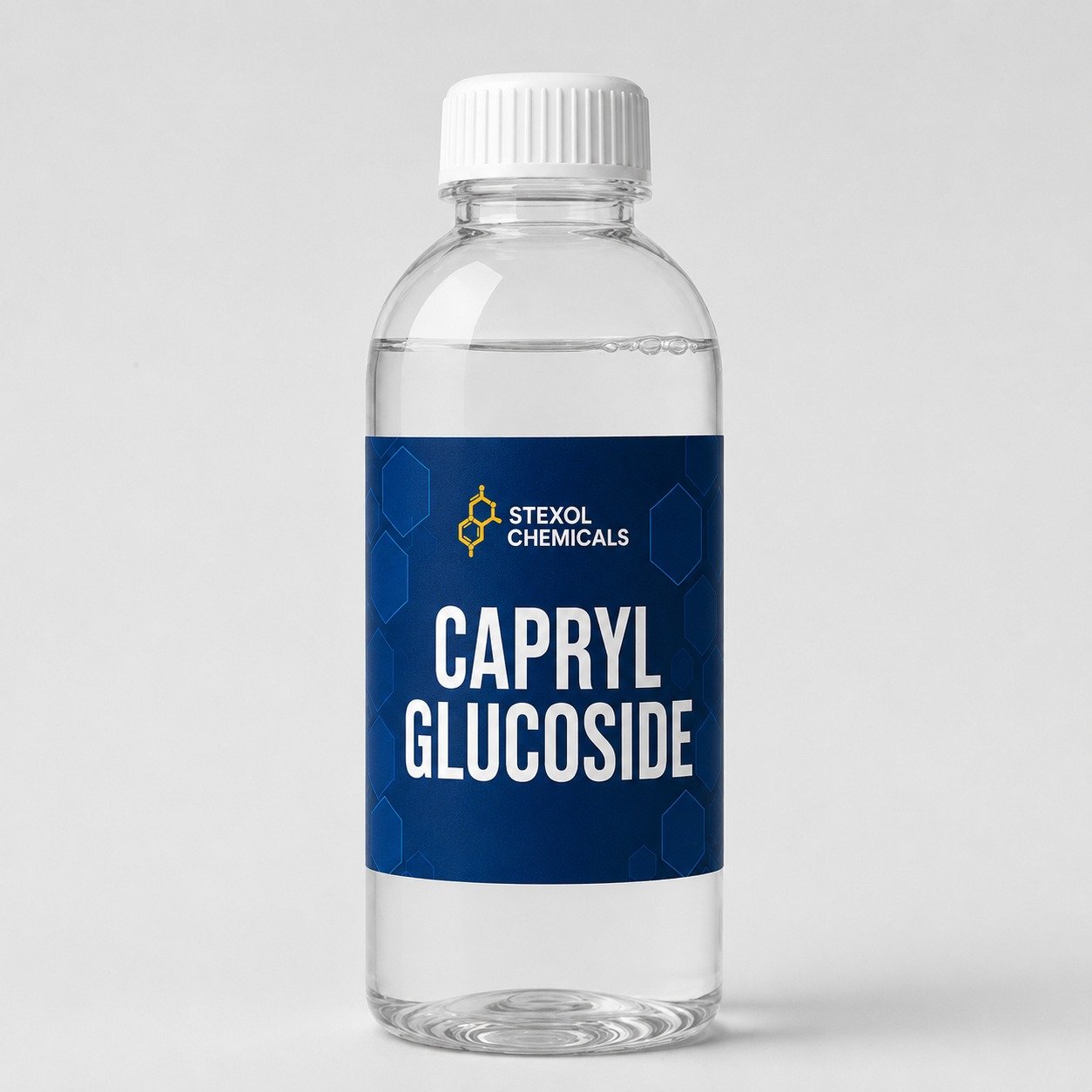
Capryl Glucoside (INCI: Caprylyl/Capryl Glucoside, CAS 68515-73-1) is a mild, plant-derived non-ionic surfactant from the alkyl polyglucoside (APG) family. thegoodscentscompany Stexol Chemicals supplies it as a viscous, pale-yellow, sometimes slightly cloudy water solution with typically 60–65% active matter. humblebeeandmebiakhim It is made by joining C8–C10 fatty alcohols from coconut or palm kernel oil to plant glucose, usually from corn. nourishusnaturals The result has a sugar-based “water-loving” head and a short “oil-loving” tail, with no ethylene oxide, no sulfate and no PEG. fillaree
Our Capryl Glucoside is the direct equivalent of three branded grades: BASF Plantacare 810 UP (62–65% active), cir-safety Seppic Oramix CG 110 (60% dry extract) knowde and Dow Triton CG-110 (described by Sigma-Aldrich as 58.0–62.0% decyl octyl glycoside and 38.0–42.0% water). All share the same INCI name, the same C8–C10 APG chemistry, the same non-ionic character and a comparable active content and performance profile. trulux You can drop it into formulas written for those grades. The only adjustments are for small differences in active % and supplied pH, both shown on our batch COA.
In sulfate-free shampoos, baby washes, face washes, body washes and micellar waters, Capryl Glucoside cleans gently, gives fine, stable foam and keeps fragrance and essential oils clear in water. consolidated-chemicalulprospector It is also a strong co-surfactant in regular SLES or SLS systems. humblebeeandme Replacing part of the anionic surfactant with Capryl Glucoside makes the finished product feel softer on skin and scalp while keeping foam and cleansing strong. For product owners, that means a formula that can carry “sulfate-free”, “plant-based” and “gentle” claims without losing lather.
Its most distinctive property is the short C8–C10 chain. Chirac et al. (2024, Journal of Surfactants and Detergents) note that “caprylyl/capryl glucoside has been known for decades as a useful bio-based solubilizer for foaming formulations”, and short-chain APGs are the best solubilizers and wetting agents in the glucoside family. Longer-chain decyl, coco and lauryl glucosides give richer lather but solubilize poorly. Capryl Glucoside works as a cleanser, hydrotrope and solubilizer at the same time. industrochem Dow reports a surface tension of 27 dynes/cm at 1% actives for Triton CG-110, so it wets skin, hair and surfaces fast. dow It also stays stable and soluble in high-alkali and high-salt systems. anecochem Seppic positions Oramix CG 110 for solubilizing essential oils, fragrances, preservatives and even cationic surfactants. seppic In many fragrance-loaded cleansers, that lets you cut or remove polysorbate 20. humblebeeandmelearncanyon
One Ingredient, Three Jobs: Cleansing, Foam Boosting and Solubilizing Most surfactants either clean or solubilize. Capryl Glucoside does both and boosts foam too. seppicspecialchem One raw material can clean, lift lather and carry fragrance or essential oils into a clear base. That means fewer ingredients to buy, stock and weigh on every batch.
Sulfate-Free, Plant-Based Claims That Sell in Pakistan Pakistani shoppers now actively search for “sulfate-free shampoo”. bloompakistan Local brands such as Conatural, Hemani, BioHunza, Saeed Ghani, Al Jannat and Eazicare all sell sulfate-free lines next to imports like OGX and L’Oréal. biohunza +3 Capryl Glucoside is the kind of mild, sugar-based surfactant that makes those labels possible. The branded equivalents (Plantacare 810 UP and Oramix CG 110) are approved for COSMOS and NaTrue natural concepts and are readily biodegradable, which gives you a credible “green” story. specialchem +3
Works With Anionic, Amphoteric and Cationic Systems Because it carries no charge, Capryl Glucoside works with every surfactant type: SLES, SLS, SCI, amino-acid surfactants, cocamidopropyl betaine and cationic conditioners. specialchem Paired with CAPB or SLES it shows synergistic foam and cleansing. vermontrufftrulux Dow lists its CG-110 grade as compatible with quats and stable in caustic solutions. dow In sulfate-free systems it boosts foam volume. xn—-utbcjbgv0e In SLES systems it improves mildness without hurting lather.
Effective at Low Doses for Better Cost Control As a solubilizer you need only about 3–5 parts per part of fragrance or essential oil, typically 1–5% of the formula. diycosmetica As a co-surfactant, 3–10% noticeably improves mildness and foam. Many locally sold APG grades are only 50% active. thenaturesstore +2 A 60–65% active grade gives you more working surfactant per kilogram, so each batch costs less in real terms.
Branded-Grade Quality at a Lower Cost, Available Locally Through Stexol Chemicals Importing branded grades means foreign-currency pricing and minimum orders; distributor Cosmetic Innov’Access, for example, lists a 25 kg Seppic MOQ for Oramix CG 110 and a 3–4 week lead time when it is not in stock. Stexol Chemicals supplies Capryl Glucoside with the same INCI and comparable active content from stock in Pakistan, with a COA per batch. Small brands and contract manufacturers get branded performance without the import hassle.
Compatible With the Ingredients You Already Use Capryl Glucoside works well with Sodium Laureth Sulfate (SLES), Sodium Lauryl Sulfate (SLS), Cocamidopropyl Betaine (CAPB), Sodium Cocoyl Isethionate (SCI), Sodium Cocoyl Glutamate, Decyl Glucoside, Coco Glucoside, Lauryl Glucoside, Polyquaternium-7 and -10, Guar Hydroxypropyltrimonium Chloride, Cetrimonium Chloride, Xanthan Gum, Glycerin, Panthenol, Aloe Vera, Hydrolyzed Proteins, fragrances, essential oils, Sodium Benzoate, Potassium Sorbate, Phenoxyethanol, Citric Acid, Lactic Acid and Sodium Chloride.
Capryl Glucoside is a viscous, pale-yellow liquid that may look slightly hazy. biakhim The haze is normal and does not affect performance. With APGs supplied at high pH, it usually clears once the finished product is brought below pH 7. biakhimbiakhim It dissolves easily in cold or warm water, so it suits both cold-process and hot-process batches. seppichumblebeeandme
Supplied pH depends on the producer. Some grades are alkaline (around pH 11.5–12.5 at 10%), while others are pre-neutralized (around pH 5.5–6.5). humblebeeandme +4 Always check the pH on your batch COA and adjust the finished product with citric or lactic acid. humblebeeandme
To solubilize fragrance or essential oils, premix the oil with Capryl Glucoside first, stirring until clear, then add the blend to the water phase. happidiycosmetica Add it to the surfactant phase with slow, low-shear stirring so you don’t trap air or build foam. nourishusnaturals Keep the container tightly closed after use. Store it between about 10°C and 40°C. biakhimbiakhim Below about 10°C the liquid thickens and pours poorly. knowde If it has thickened or separated, warm it gently (not above 50°C) and stir until uniform before use. biakhim +2
Note that Capryl Glucoside is thin and can lower viscosity. humblebeeandmevermontruff Plan to thicken with xanthan gum or another natural gum, or with salt in anionic/amphoteric systems.
Target pH: 4.5–6.5 for most finished products (5.0–6.0 for baby and facial cleansers; 4.0–5.0 for intimate washes).
| Product Type | Capryl Glucoside in Formula (by weight, as supplied) |
| Sulfate-Free Shampoo (primary surfactant with CAPB/amino-acid surfactants) | 8% – 20% |
| SLES/SLS Shampoo or Body Wash (mildness/foam co-surfactant) | 3% – 10% |
| Baby Shampoo & Baby Wash | 5% – 15% |
| Facial Cleanser / Face Wash | 10% – 20% |
| Body Wash / Shower Gel | 10% – 25% |
| Micellar Water / Makeup Remover | 2% – 6% |
| Intimate Wash | 3% – 10% |
| Liquid Hand Wash / Foaming Cleanser | 5% – 15% |
| Wet Wipes Lotion | 0.5% – 2% |
| Fragrance / Essential Oil Solubilizer | 3–5 parts per 1 part oil (typically 1% – 5%) |
COA By Batch Every batch ships with its own Certificate of Analysis, so you know the active content, pH and appearance before the material reaches your mixing tank.
There is No Minimum Order Pressure Order a small pack to run trials or start a new brand, or order bulk drums for production. We supply both.
Discounted Pricing on Bigger Orders The more you order, the better your rate. Message us on WhatsApp [+92-316-0099118] with your quantity for a tiered bulk quote.
Same-Day Dispatch Orders confirmed before our daily cut-off time are dispatched the same day, so your production stays on schedule.
Q: Is Stexol’s Capryl Glucoside equivalent to Plantacare 810 UP, Oramix CG 110 and Triton CG-110?
A: Yes. All of them carry the INCI name Caprylyl/Capryl Glucoside, are C8–C10 non-ionic APG surfactants and come in a similar active range (Plantacare 810 UP 62–65%, Oramix CG 110 60%, Triton CG-110 58–62%). You can use it as a drop-in replacement. Just check the active % and pH on our COA and adjust your acid addition if needed.
Q: Why should I adjust pH after adding Capryl Glucoside, and is heat a problem?
A: Depending on the source, the supplied pH can be alkaline (up to about 12) or near-neutral. Your finished product needs to sit in a skin-friendly range, usually pH 4.5–6.5, which also helps your preservative work. Bringing the pH below 7 also clears any natural haze. Heat is not needed. It mixes in cold water, can go into a warm water phase, and only needs gentle warming if it has thickened in cold weather.
Q: Will Capryl Glucoside give enough foam, and does it work with SLES and CAPB?
A: On its own it gives a fine, light foam rather than a big, rich lather. diycosmetica Its real strength is boosting and stabilizing foam when paired with CAPB, SLES, SCI, amino-acid surfactants or decyl/coco glucoside. trulux For a dense sulfate-free lather, combine it with CAPB and a longer-chain glucoside such as decyl glucoside. humblebeeandme
Q: How should Capryl Glucoside be stored, and what is its shelf life?
A: Store it in its original, tightly closed container in a cool, dry place away from direct sunlight, ideally between 10°C and 40°C. Avoid temperatures above 50°C. ellementalknowde In a sealed container, typical shelf life is 24 months from the manufacturing date. specialchem +2 Stir before use if it has been stored for a long time or in cold conditions.
Q: Can I use Capryl Glucoside with other surfactants, conditioners and preservatives? A: Yes. Because it is non-ionic, it works with anionic (SLES, SLS, SCI), amphoteric (CAPB) and cationic ingredients (Polyquaternium, Guar Hydroxypropyltrimonium Chloride, Cetrimonium Chloride). It also works with common preservatives, gums, glycerin, extracts and fragrances. As always, run a small stability test on your final formula, especially for clarity and viscosity.
Capryl Glucoside (Caprylyl/Capryl Glucoside) is available from Stexol Chemicals in small trial packs and bulk packing, with a COA with every batch, same-day dispatch on orders placed before cut-off, and tiered pricing for bulk buyers. Message us on WhatsApp today on this number [+92-316-0099118] for your quote and give your next sulfate-free launch branded-grade performance at a local price.
| Weight | 1 kg, 500g, 250g, 100g |
|---|
Specifications not available.
Reviews
There are no reviews yet.