
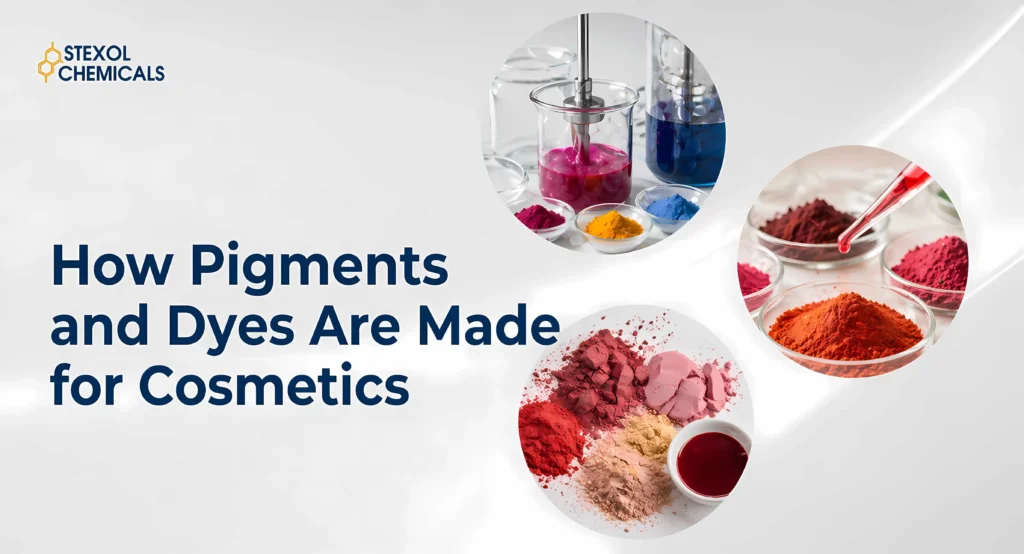
Cosmetic pigments and dyes are manufactured from three overarching methods, including synthetic chemical methods, mineral extraction, and natural plant extraction. They fall into four main types: inorganic (mineral-based) pigments, organic (carbon-based) pigments, “lakes” (dyes that go together with metallic salts), and natural/botanical pigments. These colorants, finely ground and mixed with oils, waxes, or powder, have to satisfy severe regulatory requirements before being used in lipsticks, eyeshadows, and foundations.
The color of lipstick, the shine of eyeshadow, or the flawless coverage of foundation doesn’t happen by chance. Every cosmetic colorant is backed by a carefully designed, science-based manufacturing process that balances performance, safety, and regulatory compliance. Whether you’re a beauty brand owner searching for raw materials, a formulator developing a new product, or an indie creator preparing your first launch, understanding how cosmetic pigments and dyes are made gives you a real competitive edge.
This guide keeps each of the colorant categories broken down further along with the science of how they are made and the formulation steps involved to turn the raw material into the colors that consumers trust to be from the inside, in.
Color is one of the biggest drivers of buy-in beauty. Research is able to show that shade is the biggest factor in a customer’s selection of a lip color, foundation, and eye product. But cosmetic-grade colorants will have a lot more to do than just look good on a palette. They must be stable to heat, light, and humidity, be well adhered to the skin, be non-irritant, and comply with the authorized lists by controlling regulatory authorities such as the FDA, EU, and local authorities around the world.
This is why manufacturing cosmetic pigments and dyes is such a specialized field. The ability to source materials from a trusted, compliant supplier is essential to upholding your brand’s integrity.
| Colorant Type | Raw Source | Key Products | Stability |
| Inorganic Pigments | Natural minerals, iron oxides, mica, ultramarines | Foundations, powders, long-wear makeup | High |
| Organic Pigments & Synthetic Dyes | Petroleum / coal tar derivatives | Lipsticks, eyeshadows, vibrant lip glosses | Medium–High |
| Lakes (Insoluble Pigments) | Water-soluble dyes + metallic salts (Al, Ca, Ba) | Lipsticks, lip gloss, blushes | High (oil-based systems) |
| Natural/Botanical Pigments | Fruits, vegetables, seeds, plants | Natural & organic cosmetics | Variable (lower under heat/UV) |
Inorganic pigments are formulated from natural minerals or are created in a controlled environment in a laboratory. Common examples of these are refined oxides of iron, mica, ultramarines, and greens of chromium oxide.
Naturally occurring minerals are extracted from the ground, refined to remove heavy metals and contaminants, and ground into fine powders to provide them with uniform particle size. Synthetic versions are made by chemical precipitation due to the demand for purity and uniformity from batch to batch. The result is a pigment that is very stable, opaque, and ideal for foundations, powders, and to make long-lasting makeup.
Because the inorganic pigments used for cosmetics are usually compatible and do not migrate, they are used for cosmetics with a long wear time. Mica in combination with titanium dioxide or iron oxides is what gives pearly and shimmer effects, which are the essence of highlighters and eyeshadows.
Organic pigments and artificial dyes are carbon-source pigments with hydrocarbons from petroleum, coal, or tar sources. They create strong colors that are bright and highly saturated, which are simply not possible with inorganic pigments.
These colorants are produced through organic chemistry reactions. The raw materials go through extensive purification to remove toxic heavy metals and harmful by-products. Purification is not optional; cosmetic-grade synthetic dyes must meet strict purity standards defined by regulations.
The important difference between a synthetic dye and pigments is solubility. Dyes dissolve in their medium (water-based or oil-based), while pigments are insoluble. This is why you will find dyes in lip glosses, which are transparent, and pigments in lipsticks and eyeshadows, which are opaque in color in tinted moisturizers.
Lakes are oil-dispersible pigments created by combining a water-soluble dye with a metallic salt, usually aluminum, calcium, or barium. This chemical reaction causes the dye to separate from the solution and form a stable, insoluble pigment particle.
Lake pigments are extremely versatile. Because they are oil-dispersible, they blend seamlessly into oil-based cosmetic formulas like lipsticks, lip glosses, and blushes without bleeding or migrating into fine lines. Their compatibility with waxes and oils makes them essential in lipstick manufacturing, where color payoff and longevity are key.
Natural botanical pigments are colorants extracted from fruits, vegetables, seeds, and plants. Examples include beetroot (red/pink), spirulina (blue/green), gardenia (yellow), and purple sweet potato. These pigments are especially appealing to consumers seeking clean and sustainable beauty products.
Plant materials are chopped, concentrated, and processed into pigments or flakes using solvent extraction, freeze drying, or spray drying. Unlike their synthetic counterparts, natural pigments are often less stable to heat, light, and oxidation. As a result, formulation chemistry plays a crucial role in determining shelf life.
For indie cosmetic makers and brands that are trying to position themselves in the organic space, natural pigments present an exciting story to tell, though they do have demanding tests to follow to avoid consumer safety concerns and inaccurate labeling.
Once a colorant is chosen, it must be thoroughly blended into a cosmetic base. Pigments are dispersed in oils, waxes (like beeswax or carnauba), or powders (such as talc or starch) using high-shear mixers. This process ensures even color distribution and prevents clumping. Poor dispersion can lead to streaky, uneven application and inconsistent shades from batch to batch.
In lipstick manufacture, for example, the process is to heat a mixture of castor oil, waxes, and lanolin and add the blend of pigments mixed to controlled shear before molding. The order and the temperature of each of the steps have a direct effect on the texture, gliding, and color pay-off of the product.
Beyond traditional colorants, the industry has developed UV-sensitive photochromic pigments that change color when exposed to sunlight. These are used for innovative products like mood-changing lip colors and unique eye looks. Similarly, pearlescent pigments (mica coated with metal oxides) create the shimmer seen in most highlighters and illuminating serums. It’s vital to ensure that specialty pigments are safe for personal care products and are on approved colorant lists.
Cosmetic colorant sourcing regulatory compliance is no bargain. Different markets maintain different lists of approved products and requirements for testing. All colorants used in consumer cosmetics must comply with strict regulatory standards to ensure they are stable, safe, and vibrant for skin contact. Non-compliant colorants can lead to product recalls, fines, and negative publicity risks no beauty business can afford.
| Regulatory Body | Region | Key Requirement |
| FDA (21 CFR Part 73/74) | USA | Pre-approval for color additives; batch certification for synthetic dyes |
| EU Cosmetics Regulation 1223/2009 | Europe | Annex IV approved colorants list; coal tar dyes restricted |
| China NMPA | China | Approved colorant catalogue; mandatory product registration |
| IS 6608 / BIS | India | Aligns with EU standards; heavy metal limits enforced |
One of the most common and expensive mistakes made during the development of cosmetics is that of correctly choosing the colorant type. A follow-on to that is an operational framework:
Sourcing the right cosmetic-grade pigments and dyes takes more than browsing a catalog. You need a supplier with deep expertise in formulas, quality control, and regulations. Stexol Chemicals provides all this and more: a complete range of certified cosmetic colorants, from pure iron oxides to aluminum lakes and specialty pearlescent pigments, all with full compliance documentation for global markets.
Choose certified, cosmetic-grade colorants that meet international standards and make your formulas stand out on every shelf. Contact Stexol Chemicals today and make your beauty idea come true with colors that get the job done.